Fire Hydrant Booster Testing Sydney
AS1851 Five-Year Booster Flow Testing & Compliance Verification
Fire hydrant booster testing is a critical five-yearly requirement under AS1851 designed to confirm that a building's hydrant system can accept fire brigade boost pressure and deliver sufficient flow during an emergency. Apex Pumps provides AS1851-compliant booster testing across Sydney, Central Coast, Newcastle, and the Hunter Valley, ensuring hydrant systems, booster assemblies, pipework, and valves perform correctly under real firefighting conditions. Booster testing is not a visual check — it is a live, high-pressure flow test that identifies hidden failures that annual inspections cannot detect.
GET YOUR FREE QUOTE NOWWhat Is Fire Hydrant Booster Testing?
Booster testing simulates a fire brigade pumping water into a building's hydrant system via the booster connection. This critical test confirms that your fire protection infrastructure can handle the extreme pressures and flow rates that firefighters will apply during an emergency response.
Unlike visual inspections or routine maintenance checks, booster testing is a live, high-pressure flow test that puts your entire hydrant system under real-world firefighting conditions. The test verifies that:
- The booster assembly can accept external pressure from fire brigade equipment
- Pipework can withstand emergency boost pressures without failure or deformation
- Adequate flow reaches internal hydrant outlets at all building levels
- Valves, PRVs, and fittings perform correctly under operational load
- The system does not leak, fail, or restrict flow when firefighters need it most
This comprehensive test ensures firefighters can safely and effectively supplement water supply during a fire, protecting both building occupants and emergency responders. Booster testing is required every 5 years under AS1851 and is a mandatory AFSS compliance item in NSW.
| System Components Verified | Why Booster Testing Is Critical |
|---|---|
| Booster inlet and connection | Ensures the system can accept fire brigade pump pressure without failure |
| Non-return and isolation valves | Prevents backflow and ensures proper valve operation under boost pressure |
| Hydrant riser pipework | Verifies pipework integrity under emergency firefighting pressures |
| Pressure relief and reduction valves (PRVs) | Confirms PRVs function correctly and prevent over-pressurisation |
| Hydrant outlets and valves | Ensures adequate flow and pressure reach all building levels |
| Booster assembly components | Validates AS1851 compliance and system readiness |
| Fire service pipework and fittings | Reveals hidden leaks, weak sections, and structural issues |
| Control valves and isolation zones | Ensures proper system operation and emergency response capability |
AS1851 Booster Testing Requirements
Apex Pumps performs all booster flow tests in strict accordance with AS1851:2012 — Section 7 (Hydrant Systems) and NSW Annual Fire Safety Statement (AFSS) requirements.
Under AS1851, booster flow testing is a mandatory requirement that must be completed every 5 years. The standard specifies that:
- Testing must simulate fire brigade pumping conditions
- Flow and pressure must be measured at hydrant outlets
- Pipework, valves, and booster components must be verified
- All failures must be documented and rectified
- Compliance documentation must be AFSS-ready
Booster testing is a mandatory AFSS compliance item in NSW. Without a valid five-year booster test certificate, your Annual Fire Safety Statement cannot be completed, which can result in:
- AFSS rejection by fire certifiers
- Insurance coverage issues
- Legal compliance problems
- Occupancy certificate delays
Our booster testing services ensure your building meets all AS1851 requirements and provides the documentation needed for your AFSS submission.
Our Booster Testing Process
1 Pre-Test Assessment
+Before pressurisation, we conduct a comprehensive pre-test assessment to ensure safe and accurate testing:
- Booster inlet condition and accessibility inspection
- Non-return and isolation valve functionality checks
- PRVs and pressure control device verification
- Pipework integrity visual inspection
- Hydrant valve accessibility confirmation
- Test points and isolation zones identification
- Safety and risk controls assessment
This thorough pre-test evaluation ensures we can safely simulate fire brigade boosting conditions and identify any potential issues before live testing begins.
2 Live Booster Flow Test
+Using calibrated testing equipment, we introduce water at controlled pressure to simulate fire brigade boosting. This live test replicates the exact conditions firefighters will experience during an emergency response.
During the booster flow test, we measure and document:
- Incoming booster pressure: The pressure applied at the booster connection
- Flow rates through hydrant outlets: Actual water delivery at each test point
- Pressure drop across the system: Friction losses and system resistance
- Valve and PRV performance: Operation under boost conditions
- Leakage under load: Any system leaks that only appear under pressure
- Structural integrity of pipework: Deformation, movement, or failure points
This comprehensive measurement ensures we can verify that your hydrant system will perform correctly when firefighters need it most.
3 System Performance Verification
+After the live flow test, we conduct detailed performance analysis to assess system capability:
- Friction losses: Pressure drop through the system under flow conditions
- Pressure reduction behaviour: How PRVs respond to boost pressure
- Hydrant usability under boost: Whether adequate flow reaches all levels
- Valve operation and response: Proper functioning of all control valves
- Pipework fatigue or deformation: Structural issues that could cause failure
Any failure under booster conditions is classified as high-risk and requires immediate attention. We document all findings with detailed severity assessments to help prioritise rectification work.
4 Compliance Reporting & Certification
+Each booster test includes comprehensive documentation for AS1851 compliance and AFSS submission:
- AS1851 booster test report: Complete test documentation meeting standard requirements
- Pressure and flow logs: Detailed measurement records from all test points
- Photos of test points and defects: Visual evidence of system condition and any issues found
- Defect severity assessment: Prioritised list of issues requiring attention
- Rectification recommendations: Specific guidance on required repairs or replacements
- AFSS-ready documentation: All paperwork formatted for fire certifier submission
Our reports meet fire certifier and insurer requirements, ensuring smooth AFSS processing and maintaining your building's compliance status.
Why Choose Apex Pumps?
Trust Apex Pumps for your booster testing needs with our proven expertise and commitment to AS1851 compliance. We test hydrant systems as firefighters will use them — not just on paper.

AS1851 Hydrant System Specialists
Highly trained technicians with extensive experience in AS1851 booster testing and complex riser systems across all building types.

Accurate Flow & Pressure Measurement
Professional-grade calibrated testing equipment for precise flow rate and pressure verification at all hydrant outlets and test points.

Detailed AFSS-Ready Reporting
Comprehensive booster test reports with pressure logs, flow measurements, photos, and certificates meeting fire certifier and insurer requirements.
Rectification Capability
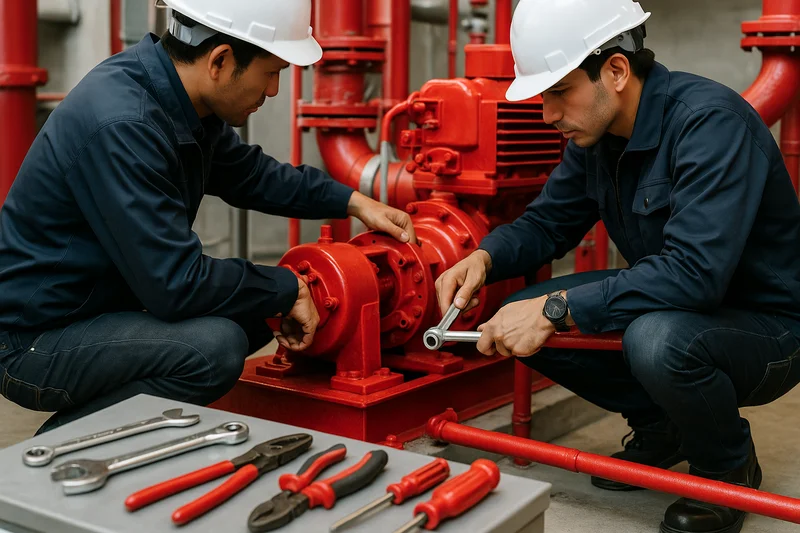
If defects are found during testing, we provide repairs, valve replacement, PRV servicing, and pipework rectification to restore system integrity.
Service Coverage Across NSW
Complete booster testing service available across Sydney, Central Coast, Newcastle, and the Hunter Valley.
Why Booster Testing Is Critical
Booster testing identifies hidden system failures that annual inspections and visual checks cannot detect. Without this live flow test, critical defects remain hidden until a real fire emergency occurs.
Common failures identified during booster testing:
- Leaking riser pipework that only fails under boost pressure
- Failed non-return valves that allow backflow under boost conditions
- PRVs stuck or incorrectly set, causing pressure regulation failures
- Hydrant valves unable to sustain adequate flow under boost pressure
- Pipe sections bursting or deforming under emergency firefighting pressures
- Poor hydrant outlet pressure at upper building levels during boost conditions
- Booster assembly components that appear functional but fail under real-world conditions
The consequences of skipping booster testing:
- AFSS rejection — cannot complete Annual Fire Safety Statement
- System failure during actual fire emergency when firefighters need it most
- Insurance claim denial due to non-compliance with AS1851 requirements
- Severe legal liability if system fails during fire event
- Total system failure during fire brigade boost operations
Who Requires Booster Testing?
Any building with a hydrant booster connection requires five-yearly booster testing under AS1851. Apex Pumps provides booster testing for:
Strata Buildings
Apartment complexes & residential buildings
Commercial Buildings
Offices & business facilities
Industrial Facilities
Manufacturing plants & production sites
Retail & Shopping
Shopping centres & retail spaces
Healthcare & Education
Schools, hospitals & aged care facilities
Warehouses & Logistics
Distribution centres & storage facilities
Government Buildings
Public facilities & government properties
Fire Contractors
Subcontract testing services
New Construction
Developers & construction projects
What You Receive After Booster Testing
Comprehensive AS1851 documentation and certification for complete AFSS compliance
AS1851 Booster Test Report
Official booster flow test report meeting AS1851 Section 7 requirements
Pressure & Flow Logs
Detailed pressure and flow measurement records from all hydrant outlets and test points
Defect Listing
Priority-ranked recommendations with severity classifications
Photo Evidence
High-resolution photos documenting all test points and findings
Rectification Plan
Optional step-by-step plan for addressing identified issues
Updated Logbook
Service logbook entries documenting all testing activities
AFSS Documentation
Ready-to-submit documentation for fire certifiers
Booster Testing FAQs
How often is booster testing required?
+Booster testing is required every 5 years under AS1851 Section 7 (Hydrant Systems). This is a mandatory AFSS compliance item in NSW.
Is booster testing disruptive?
+Booster testing is planned to minimise disruption to building operations. Most tests are completed within 2–4 hours, depending on building size and system complexity. We coordinate with building management to schedule testing at convenient times.
Can a system pass annual inspections but fail booster testing?
+Yes. This is extremely common.
Annual inspections are primarily visual checks that cannot detect issues that only appear under live boost pressure. Booster testing simulates real firefighting conditions and often reveals hidden failures such as leaking pipework, failed valves, or inadequate flow that annual inspections miss.
Can Apex Pumps fix defects found during booster testing?
+Yes — we provide comprehensive rectification services if defects are found. This includes repairs, valve replacement, PRV servicing, pipework rectification, and any other necessary work to restore system integrity and ensure compliance.
What happens if we skip booster testing?
+Skipping booster testing results in:
- AFSS rejection — cannot complete Annual Fire Safety Statement
- Insurance coverage issues
- Hidden system failures that may cause total system breakdown during fire emergency
- Legal compliance problems and potential liability
Booster testing is mandatory under AS1851 and cannot be skipped.
How is booster testing different from flow testing or hydrostatic testing?
+Booster testing simulates fire brigade pumping water into the hydrant system via the booster connection, testing the system's ability to accept external boost pressure and deliver adequate flow.
Flow testing evaluates pump performance and water delivery under normal operating conditions.
Hydrostatic testing verifies structural integrity and pressure capacity of system components.
All three tests are required under AS1851 and serve different but complementary purposes.
What documentation do we receive after booster testing?
+Each booster test includes comprehensive AS1851 documentation:
- AS1851 booster test report
- Pressure and flow logs from all test points
- Photos of test points and any defects found
- Defect severity assessment and rectification recommendations
- AFSS-ready documentation for fire certifier submission